

University of Cambridge · Research project

Everyone agrees Brazilian prisons are a failure. Everyone agrees the answer is more of them.

The Prison Consensus: Incarceration, Investment and Inequality in Brazil

Fieldwork photograph, 2025.

The project

Thirty years ago, Brazil had incarceration rates comparable to Scandinavia’s. It now has one of the three largest prison populations in the world: 960,976 people deprived of liberty in December 2025, according to the National Secretariat for Penal Policy. Across decades of growth and recession, of rising and falling poverty, and under governments from the centre-left to the far right, the expansion of the prison system has been a constant since re-democratisation.

Brazil’s prisons are widely described as a failure, including by those who run them. Most units, including the newest, are governed by organised criminal groups, and massacres still happen. Yet there is broad agreement among NGOs, courts, investors, political parties of the left and right, and even criminal organisations that the response should be to build more prisons in order to “humanise” the system and reduce overcrowding. We call this agreement the prison consensus.

The project asks why the consensus holds, how it is reshaping Brazilian society, who benefits from it, and how large-scale prison investment is financed under otherwise tight public budgets. It is a three-year study funded by the Leverhulme Trust, based at the Centre of Latin American Studies and the Department of Politics and International Studies, University of Cambridge.

Research questions

  1. How and where has the prison system expanded in Brazil?
  2. What political processes have enabled this expansion?
  3. How has it been legitimated?
  4. Who profits from it?

Hypotheses

We test two hypotheses. First, that new prisons reproduce the conditions of violence and vulnerability that sustain organised crime. Second, that while new prisons offer a modern architectural form of punishment, they also create new territory for criminal groups to contest and control. Fifty-three such groups now operate in prisons, and in parts of cities, across every Brazilian state. In the 1970s none of them existed.

We also look at what prisons produce besides confinement: jobs, contracts for private companies, debt, corruption and costs, and the claim that more prisons will fix the problems that existing ones create.

Prison growth, 1970–2025

Brazil’s prison system held about 90,000 people in 1990. In December 2025 it held 960,976: 727,301 in prison cells and the rest under house arrest, with or without electronic monitoring. The number of prison units grew by about 13.5 a year between 1970 and 1998, and by about 45 a year between 1998 and 2020. In December 2025 there were 1,360 units, with 505,267 places for the 727,301 people in cells.

Move the cursor or finger over the charts to see each year.

Prison units in Brazil

Number of units, 1970–2022

People deprived of liberty

Thousands, 1990–2025

Total, including house arrest from 2020In prison cells only

Sources: prison units, The Prison Consensus project from official records. People deprived of liberty: Ministry of Justice / Infopen (1990–2016; no data for 1991, 1996 and 1998), Sisdepen annual reports (2017–2024) and SENAPPEN, December 2025. From 2020 the official total includes people under house arrest; 2023–2024 totals were not published on a comparable basis and are left out.

How we work

The research combines fieldwork, interviews and official data. The team has visited more than 40 prison units, some of them still under construction, in Minas Gerais, Ceará and Mato Grosso. We have interviewed more than a hundred people, among them public officials from the different institutions involved in the prison system and representatives of the companies that provide services to it. We also collect, organise and analyse official records on prison costs, budgets and the companies contracted by the state.

AcreAlagoasAmazonasAmapáBahiaCearáEspírito SantoGoiásMaranhãoMinas GeraisMato Grosso do SulMato GrossoParáParaíbaPernambucoPiauíParanáRio de JaneiroRio Grande do NorteRondôniaRoraimaRio Grande do SulSanta CatarinaSergipeSão PauloTocantinsDistrito FederalCearáMinas GeraisMato Grosso
States where the team has carried out fieldwork.

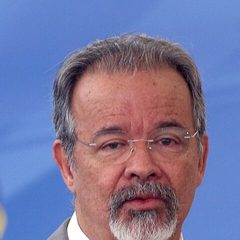
“We are creating a monster that will devour us.”

Raul Jungmann, former Minister of Public Security, 2019

The consensus in their own words

Translated from Portuguese. Each quote links to its source.

Executive

Raul Jungmann

“We think of violence and crime only as far as the prison gate. From there inwards, who cares. This is unbearable, it cannot go on like this. We are creating a monster that will devour us.”

Raul Jungmann, former Minister of Public Security, at a debate at the Institute for Advanced Studies, University of São Paulo, September 2019. Source
José Eduardo Cardozo

“I said I would rather die than serve a sentence in certain prisons in Brazil… the Brazilian prison system is made up of veritable dungeons.”

“I realised that if I used all the resources available just to build prisons, I would deliver 40,000 places. The deficit was already over 300,000.”

José Eduardo Cardozo, former Minister of Justice, at the same debate, September 2019. Source

Legislature: congressional inquiries (CPIs) into the prison system

“[...] to propose some preventive and remedial measures, tending to humanise the system.”

Final report of the CPI on the penitentiary system, Chamber of Deputies, 1993, p. 78, as quoted in Revista de Informação Legislativa, Federal Senate, 2010. Source

“Prisoners in Brazil, in their overwhelming majority, receive treatment worse than that given to animals: like human garbage… Instead of rehabilitating those who strayed from legality, the State brutalises, creates and returns to the streets veritable human beasts.”

“Solving the problem of overcrowding means taking long strides on the path to humanising this system.”

“The first and perhaps the main problem concerns prison overpopulation, present in every Brazilian state… Thus, the creation of new places in the penitentiary system is urgent.”

Judiciary

Gilmar Mendes

“Little has been done overall to bring rationality to the system.”

“The issue isn’t resolved now by building prisons. It’s obvious… It’s evident that prisons need to be built and that conditions in existing ones need to improve.”

Asked what to expect if the government relied on building new prisons without other policies: “Without any doubt, we will see an increase in crime as a whole.”

Gilmar Mendes, Justice of the Federal Supreme Court, interview with BBC News Brasil, January 2017. Source

Organised crime

“We want a prison system with humane conditions, not a failed, inhumane system in which we suffer countless humiliations and beatings. We are asking for nothing more than what is within the law… let justice be done against the injustice that is the prison system.”

Primeiro Comando da Capital (PCC), statement broadcast on TV Globo in August 2006 as a condition for releasing a kidnapped reporter. Transcript (Consultor Jurídico)

Publications

Published · Open access

Growing in and from Crisis: Environment, Labor, and Capital in Brazil’s Exponential Prison Expansion

Bruna Angotti, Graham Denyer Willis, Pedro Mendes Loureiro and Luiz Fernando Toledo. Annals of the American Association of Geographers, 2026, 1–18. doi:10.1080/24694452.2026.2688357

Abstract

Although there is widespread academic recognition of the damage effected by carceral systems, of the accelerating climate fallout, and of the unequal and crisis-ridden nature of capitalism, these three dimensions are rarely conceptualized in relation to each other. Drawing on extensive primary research conducted across Brazil, we document how managers have increasingly sought to make claims about the prison’s usefulness for combatting problems of the economy and environment, such as by using prisoners in climate-saving efforts and attracting private capital into prisons. We argue these claims to the prison’s social good do not promote social inclusion, reverse climate change, or secure the competitiveness of the Brazilian economy, but, in offering an always-escapable claim to the prison’s usefulness, they entrench the growing momentum of the carceral system.

Cite

Angotti, B., Denyer Willis, G., Mendes Loureiro, P., & Toledo, L. F. (2026). Growing in and from crisis: Environment, labor, and capital in Brazil’s exponential prison expansion. Annals of the American Association of Geographers, 1–18. https://doi.org/10.1080/24694452.2026.2688357

@article{angotti2026growing,
  title   = {Growing in and from Crisis: Environment, Labor, and Capital in Brazil’s Exponential Prison Expansion},
  author  = {Angotti, Bruna and Denyer Willis, Graham and Mendes Loureiro, Pedro and Toledo, Luiz Fernando},
  journal = {Annals of the American Association of Geographers},
  year    = {2026},
  pages   = {1--18},
  doi     = {10.1080/24694452.2026.2688357}
}
Forthcoming

Failing to Grow: How Walls Become Doorways in the Making of Brazilian Mass Incarceration

Graham Denyer Willis, Bruna Angotti, Pedro Mendes Loureiro and Luiz Fernando Toledo. Comparative Studies in Society and History.

Forthcoming

Policy and its Underside: Planning for the Prison

Bruna Angotti, Graham Denyer Willis, Pedro Loureiro and Luiz Toledo. In S. Balakrishnan, N. Phelps and L. Sotomayor (eds), Routledge Companion to Urban Planning: Planning for the Worlds Between. London: Routledge.

Fieldwork

Photographs taken by the research team during visits to prison units and construction sites. To protect the people we work with, captions do not identify locations, and no prisoners are shown.

Exercise yard seen through bars
Exercise yard seen through bars. 2025.
Razor wire on the perimeter fence
Razor wire on the perimeter fence. 2025.
Cell block under construction
Cell block under construction. 2026.
Cell door
Cell door. 2025.
Room prepared for classes
Room prepared for classes. 2025.
Inspection walkway above cells, under construction
Inspection walkway above cells, under construction. 2026.
Classroom doors
Classroom doors. 2025.
Computer room
Computer room. 2025.
Prison buildings
Prison buildings. 2025.

Team

Graham Denyer Willis

Graham Denyer Willis

Professor of Global Politics and Society, Department of Politics and International Studies; Director, Centre of Development Studies; Fellow of Queens’ College

A political ethnographer whose work examines power, violence and inequality in Brazilian cities and institutions. Author of The Killing Consensus (2015), on police and organised crime in São Paulo, and Keep the Bones Alive (2022), on Brazil’s missing people, both with University of California Press.

gdw27@cam.ac.uk

Pedro Mendes Loureiro

Pedro Mendes Loureiro

Director, Centre of Latin American Studies; Associate Professor of Latin American Studies

A political economist working on inequality and development strategies in Latin America, the dynamics of race, class and gender inequality, social policy and the history of Latin American social thought. His current research, funded by the Leverhulme Trust and the Harry Frank Guggenheim Foundation, focuses on the political economy of incarceration in Brazil.

pml47@cam.ac.uk

Bruna Angotti

Bruna Angotti

University Research Associate, Department of Politics and International Studies

A lawyer and anthropologist who has published award-winning books and articles in legal anthropology. She previously taught and researched at Mackenzie Presbyterian University and holds a PhD from the University of São Paulo, with a doctoral period at the University of Ottawa.

ba472@cam.ac.uk

Luiz Fernando Toledo

Luiz Fernando Toledo

Research Assistant, University of Cambridge; data and investigative reporter, BBC World Service

Holds master’s degrees in data journalism (Columbia University) and public administration (FGV-EAESP). His work on public transparency contributed to changes in transparency policy in Brazil.

lft29@cam.ac.uk